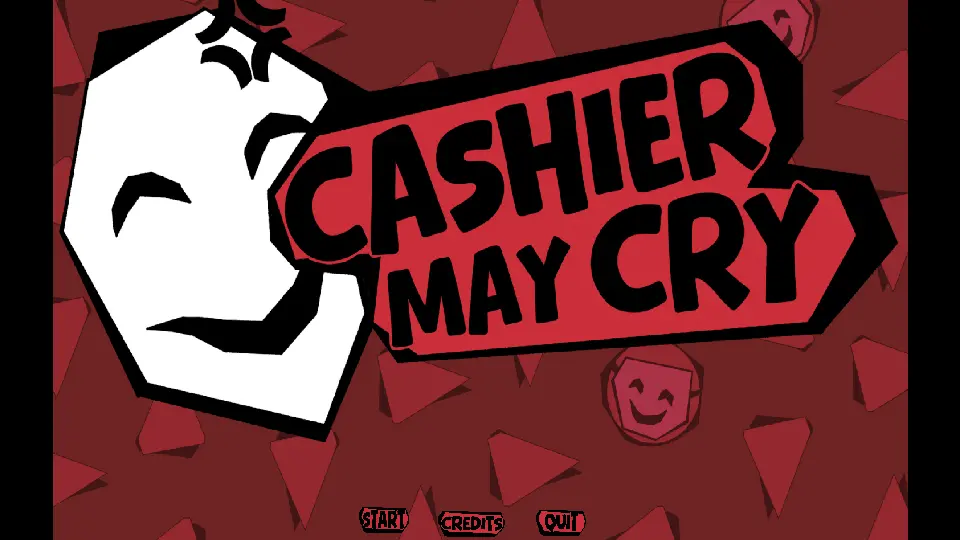
Cashier May Cry
Background
I built Cashier May Cry with a team during Global Game Jam in January 2026. This year's theme was "Mask". As usual, I didn't go in with any specific team or gameplay concept in mind, yet as usual, a team and game idea formed spontaneously and serendipitously on the first night! I was just starting to get worried that I wouldn't find the right mix of folks who were talented and open to forming a team, when I bumped into a small group saying that they needed a programmer. I said I might be able to help, and then a few other people asked if they could join, and the team was born!
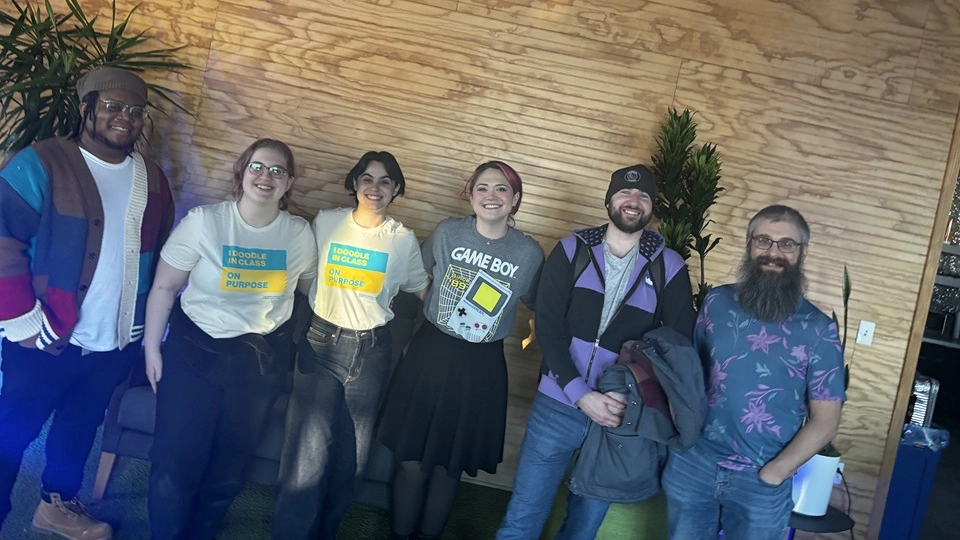
The final team included (in order from left to right in the above GGJ team image):
- Jalon Lee: our musician and SFX designer
- Madison Smith: Cleveland Institute of Arts (CIA) student who did several character designs
- Abigail Quintana: another CIA student and friend of Madison who some other character/background designs
- Chloe Clark: our game designer and UI artist (incidentally, she worked for OverDrive, the company that makes the reading app, Libby, for which I had also worked back in 2018-19!)
- Myself: a programmer and Unity generalist
- Sean Dunlap: our other programmer, who got most of the note-timing system working
Game Concept
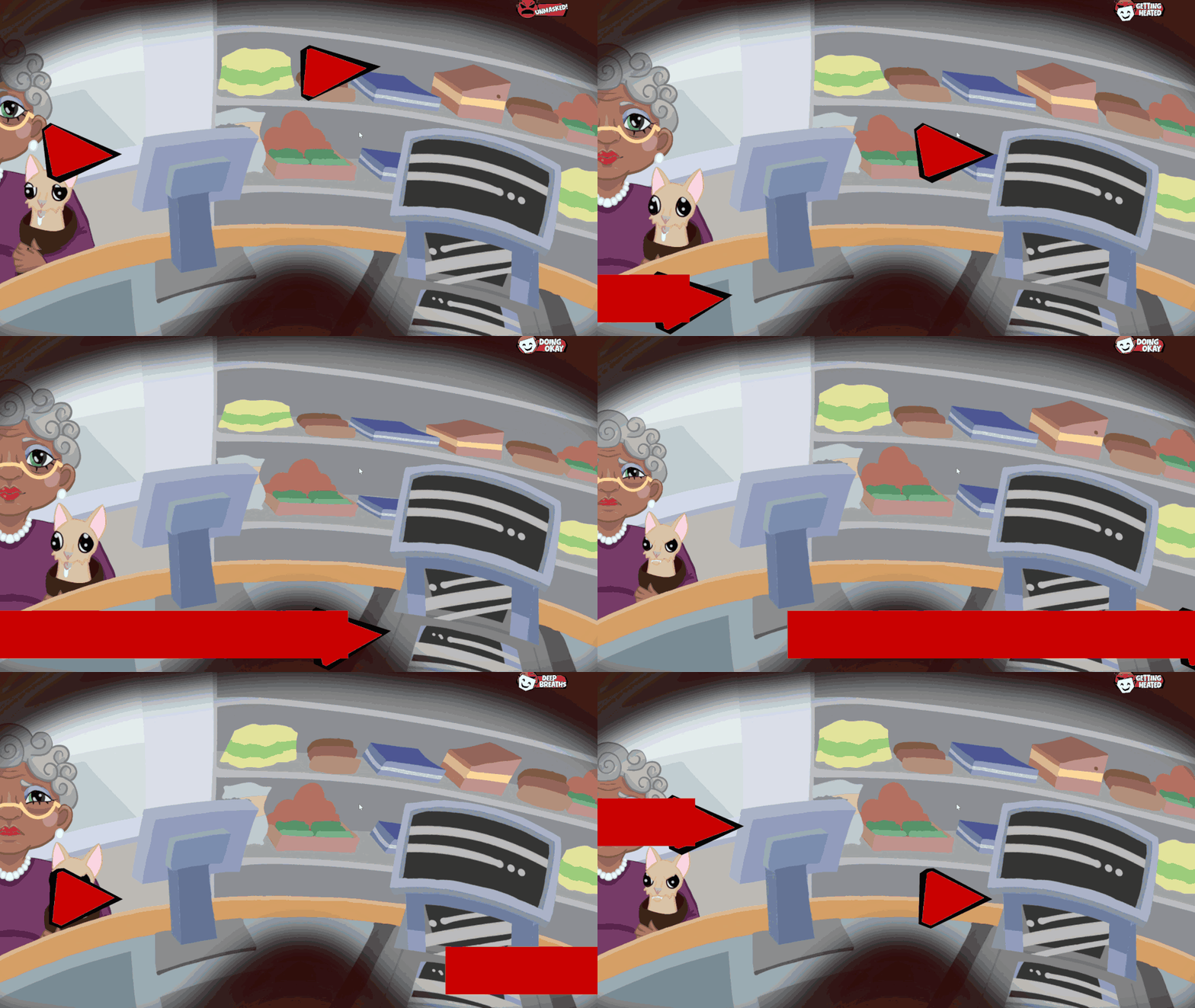
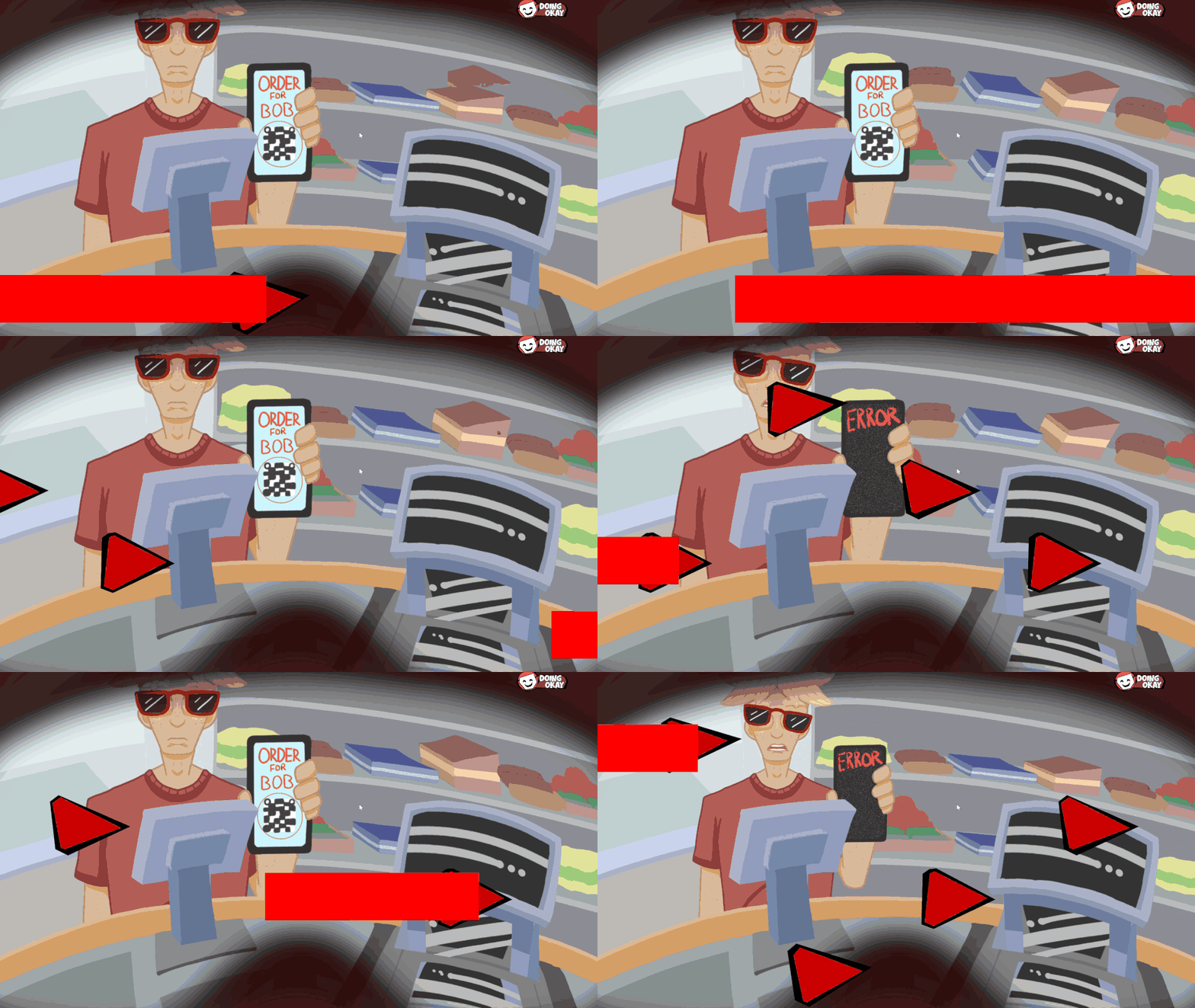
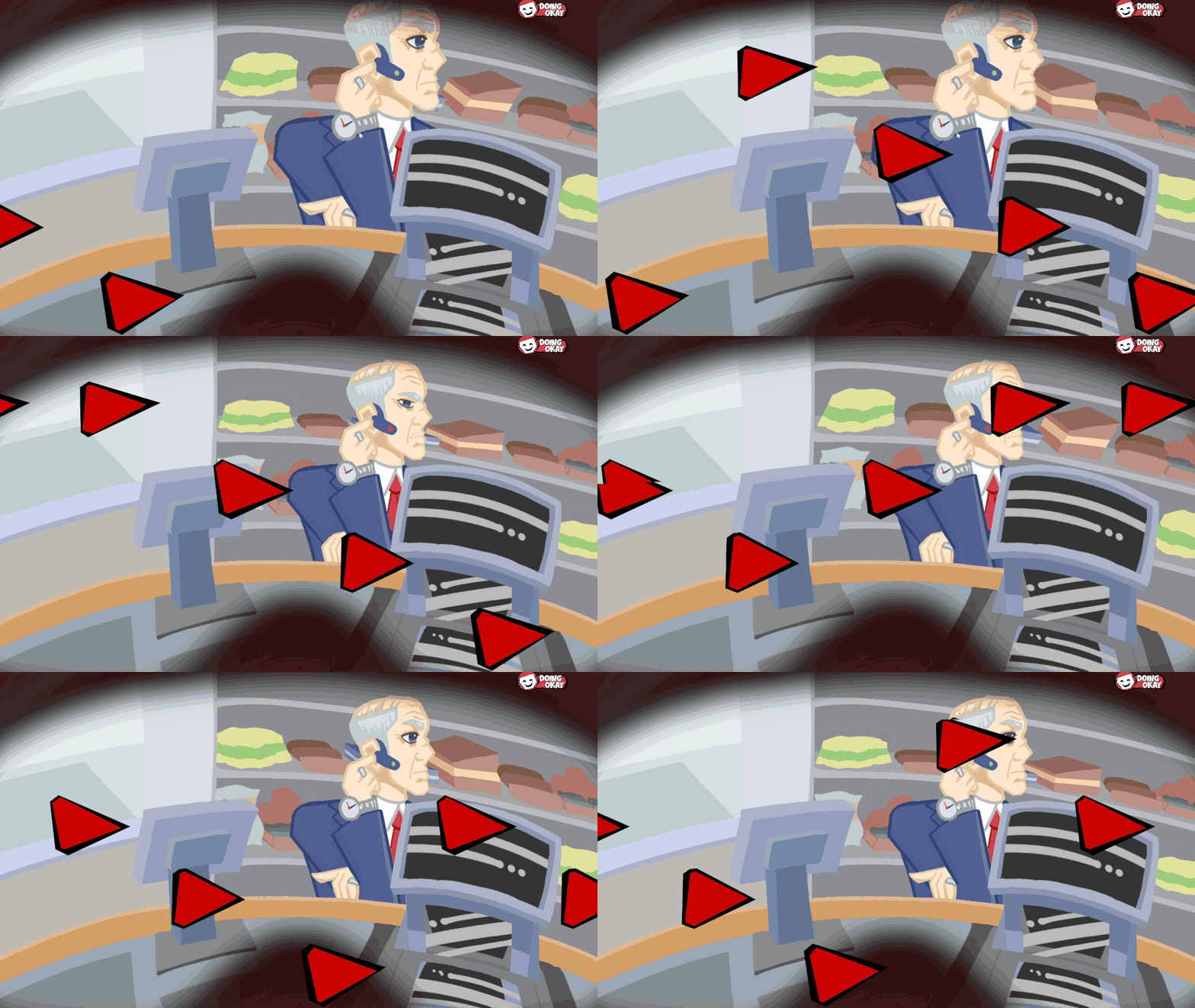
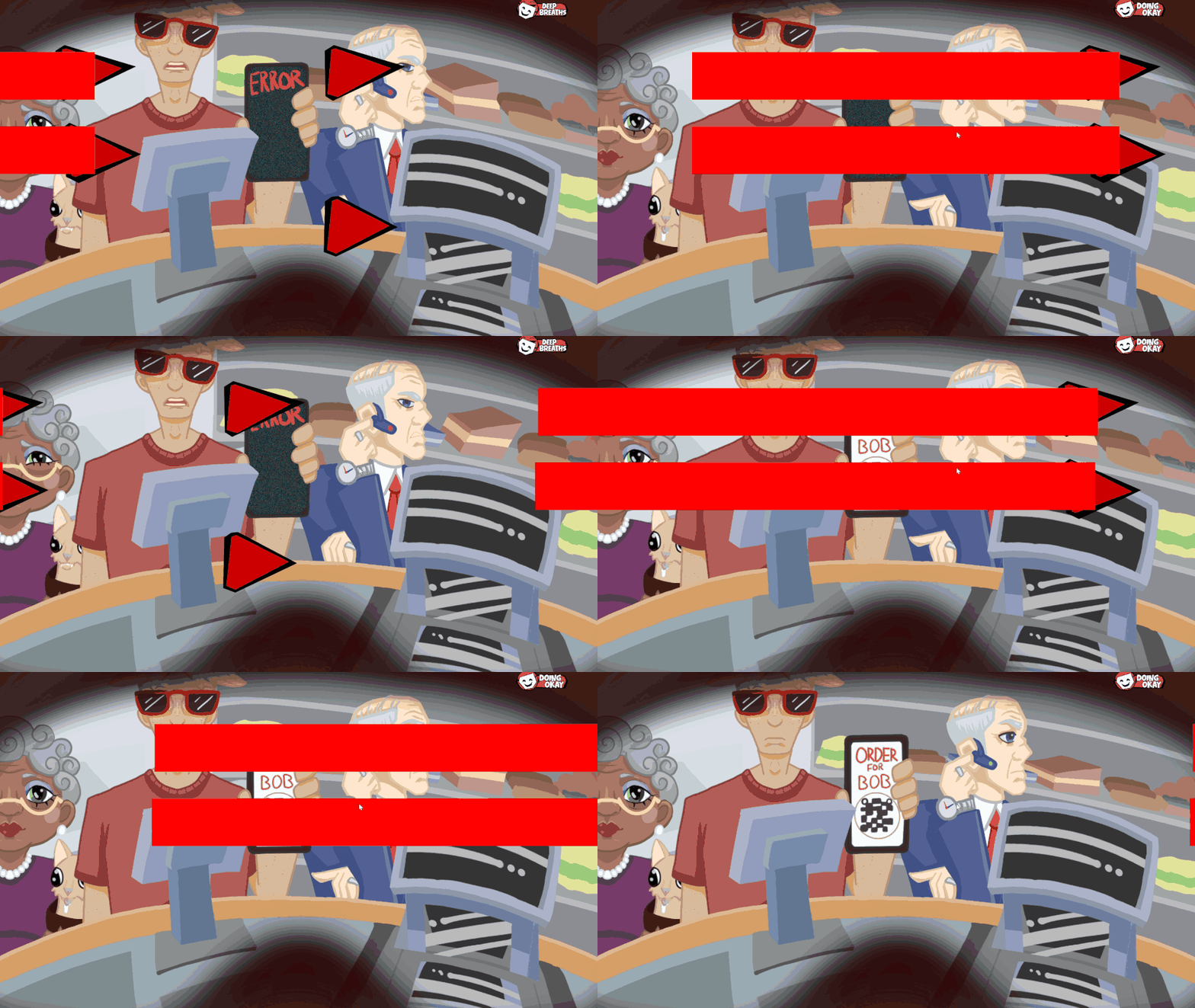
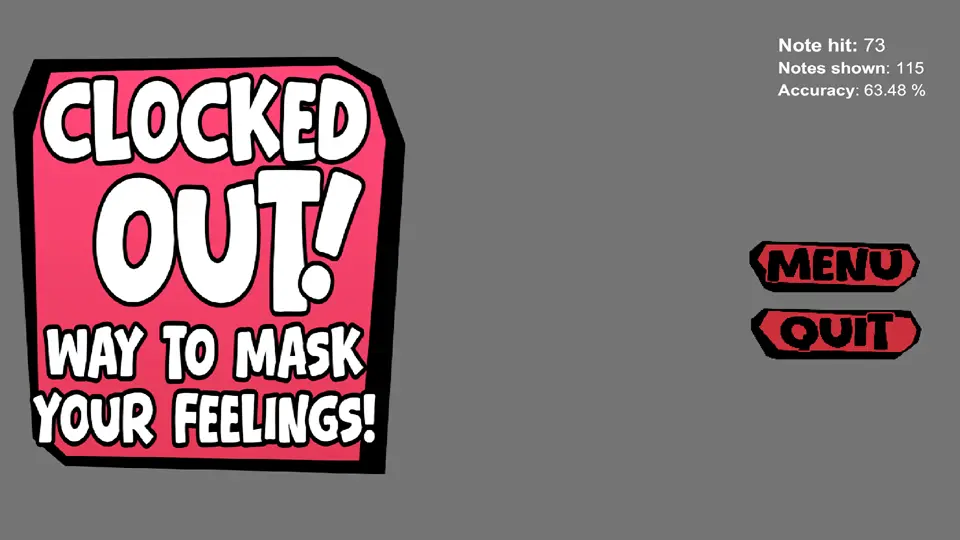
Chloe pitched the idea of a rhythm game based on "putting on a mask" as a retail worker, where following the notes of the game was like a retail worker "following the script" of their job and trying not to lose their cool with obnoxious customers (something that everyone in the group could relate to). This idea seemed charming, and it gave our musician, Jalon, a fun composing challenge. Due to time constraints (both in the jam and in the final presentation), we decided to implement just a single song, but with multiple sections tied to different "characters" that a retail worker might experience: a nice old lady with an annoying little dog, a blank-faced delivery driver who just shows their phone and then leaves, a distracted businessman talking into his ear piece and never making eye contact, etc. Missing a note would mean "letting the mask" of polite customer service fall, leading to a wince of frustration from the character. If the player could maintain some minimum accuracy for the whole song, then they could clock out and be done; if not, they would lose and presumably go have an anxiety attack.
The game came together pretty well, and despite its scrappiness, seemed to be one of the more complete games at our venue that year. The name "Cashier May Cry" is of course a play on the game "Devil May Cry", which gave our audience a good chuckle. Sean and I quickly learned that timing the moving notes with the music in a reliable/reproducible way was very tricky, especially when the notes had to move at different speeds and across screens of different widths, or be held for some amount of time; we really never got the "feel" of it quite right, despite it taking up almost all of Sean's time, and I have a new-found respect for the makers of rhythm games like Guitar Hero and Rock Band!
Technical Details
I programmed the "note spawner" logic (which Sean's code then called in sync with the music), as well as the logic to keep track of player accuracy and win/lose states. As the main Unity engineer, I also spent a lot of time importing the artists' and musician's assets and setting up character animations, all of which distracted from programming a little more than I would've liked.
I also set up the git repo and Unity project for this game in advance of the actual jam weekend, which made the opening night a lot more productive than in years past. I was able to include my UnityUtil UPM packages again, and also messed with Unity's UI Toolkit and Input System again.